I first encountered Sarah Schulman’s Conflict is not Abuse: Overstating Harm, Community Responsibility, and the Duty of Repair in the theory section of Giovanni’s Room in Philadelphia. I was working through accepting my own trauma at the time, and the idea that the toxic interpersonal relationships I had been in could be labeled simply “conflict” felt, uh, threatening. I ended up shoving the book back on the shelf, buying a cute little anthology instead, and spent the next month or two sending the cover of Schulman’s book to friends with the caption “ever felt gaslit by a book title before?” (I know)
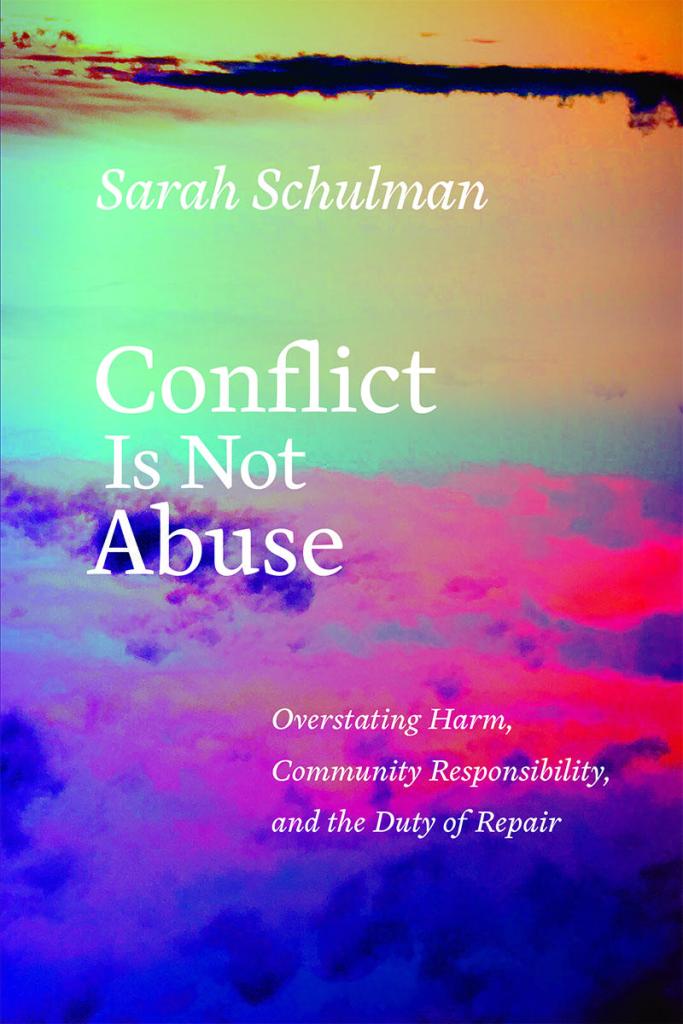
After having actually read the book though, I think my reaction is overwhelmingly positive. My initial thoughts in the bookstore were that this was going to be a minimizing, victim-blaming mess, a knee-jerk reaction to the current queer and left-wing social culture that seems dominated by allegations of abuse and the claiming of personal trauma. However, I found the thread underlying the book as a whole to be fairly grounded and uncontroversial. I think Schulman’s central thesis can be summarized as follows:
- Conflict and abuse are not the same thing
- Abuse is defined as “power over ” the victim, whether physically, emotionally, etc. And therefore there can be no such thing as “mutually abusive relationships.” She underlines this by engaging with the work of social worker Catherine Hodes.
- Traumatized individuals, by projecting their own past abuse onto present conflicts, have a tendency to overreact to “normative conflict” and escalate the situation or press accusations of abuse when they feel their sense of self or worldview threatened. Retreating into victim status ensures a sense of safety and an absolution of culpability.
- Individuals coming from a supremacist position tend to react to normative conflict in much the same way, when they feel their sense of truth threatened by difference.
- People can come from traumatized and supremacist positions at the same time! fun!
- Conflict resolution, atonement, and repair to relationships can only really happen through real conversation- shunning someone or cutting someone off is not restorative (and, she claims, largely a response of people’s contemporary ability to hide behind text and email, block people, etc.)
There’s also a bunch of stuff in here about how this plays out at a family and state level but I’m less interested in that than how this kind of escalation plays out in peer groups and intimate relationships (I also think Schulman’s chapters on the Queer family and the Israel/Palestine conflict are the weakest and weirdest parts of the book, and could’ve been expanded on but w/e)
I’ll definitely be rereading this book so I can better expand on my thoughts here- especially surrounding it’s prescience in the current social climate, why Sarah Schulman is so goddamn unpopular, and all of the glaring issues I had with the book.I will say that the first ~130 pages are required reading for those operating in queer and left circles, if you have the emotional wherewithal and stability to handle them. Ultimately, though, this discussion takes a lot of nuance and I’m tired. Tune in Friday I guess.
 Torn Apart by Wild Dogs