You Know People Don’t Have to Say it, They Can Feel it: The Room as a Queer Text

Like many people who attended liberal arts school in the mid 2010s, Tommy Wiseau’s The Room (2003) is embarrassingly integral to the emotional arc of my life. In summer of 2013, accepted students day at my first college was marked by a new friend explaining the mythos of the film in detail, and showing me The House That Dripped Blood on Alex– a Wiseau- Adult Swim coproduction. The first time I saw the movie in its entirety was that fall, with my first serious boyfriend. The occasion marked the beginning of a mutual hobby of consuming any so-bad-it’s-good media we could get our hands on. And, obviously, quoting Wiseau’s lines tirelessly in a mock accent (So how’s your sex life?). Two years later, when I had transferred schools and was in a deep depression, reading Greg Sestero’s- Tommy Wiseau’s close friend and costar’s- The Disaster Artist brought me genuine escape and nostalgic joy.
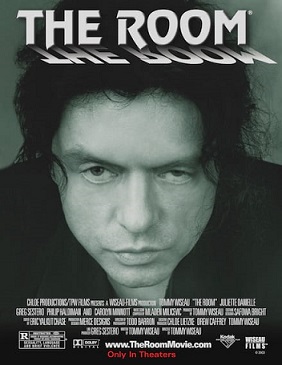
I live in fear my wonky eyelid will someday be as pronounced as Wiseau’s

It wasn’t until a few weeks ago, though, crossfaded as hell and enjoying a yearly viewing, that I found myself wondering- What happens when we talk about The Room as a piece of art on it’s own merits? As a film qua film if we want to get real pretentious with it.

So much of The Room’s cultural presence and notoriety stem from the mythology that’s been built around it. It’s impossible to have a casual conversation about the film without veering into discussing it’s troubled production, or Wiseau himself- it’s deeply weird auteur. I feel everyone collectively got so lost in trying to rationalize and explain the Room’s absolutely bizarre execution that very few people have analyzed it as a standalone piece of media. When asked for input on what exactly the plot or message of the movie was, my roommate responded with “I couldn’t tell you, but I know Tommy Wiseau really doesn’t like women.” I honestly feel that’s a great assessment and starting point.

At face value, The Room is the story of Johnny, an All-American (lol) man who works at a bank in an unspecified position. He lives an idyllic life in San Francisco with his Fiancee Lisa, and appears to be loved by absolutely everyone (even the floral shop lady calls him her favorite customer). He maintains close friendships with many people in his apartment building, to the extent that they wander in and out of his home as they please. He’s also excessively kind and good natured, showering Lisa with affection and gifts, and going so far as to pay rent for Denny- an orphaned young man whom is practically his adopted son.

However, after Johnny fails to receive an expected promotion, Lisa decides that she no longer loves him or wishes to get married, against her mother’s urging. She instead decides she is in love with Mark- Johnny’s closest friend- and presses him into a sexual relationship, erstwhile luring the sober Johnny into drinking so that she can claim he became belligerent and assaulted her. As Lisa and Mark’s relationship escalates (despite Mark’s weak assertions that he doesn’t wish to hurt his best friend), Johnny grapples with the stress of being falsely accused of abuse. This comes to a head at Johnny and Lisa’s engagement party, where the revelation of the affair drives Johnny to commit suicide. Mark, Lisa, and Denny then weep over his body. Johnny is a wonderful man with a perfect life, destroyed by the opaque and nefarious whims of his female partner. End Scene.

As strange as it may sound coming from that plot description, I believe there is solid ground for a queer reading of The Room. This is not an argument for for reading of homoerotic subtext between the characters of Johnny and Mark, something suggested by the 2019 film adaption of Greg Sestero’s the Disaster Artist. The conflict therein frames Wiseau’s screenplay as a method of conveying to Sestero his hurt at having a woman (Sestero’s then-girlfriend) come between them. I’ve also been reminded by a friend that in the book itself, Sestero speculates that Wiseau is gay. I believe that reading sexual attraction into these characters’ relationship would thus imply conjecture about Wiseau (which is not my job here), and would also be groundless and politically vacuous. As Leo Bersani states in his essay Gay Betrayals:

“…gay literary studies, for example, is tireless in it’s pursuit of what is called homoeroticism in a significant number of significant writers from the past. We end up with the implicit but no less extraordinary proposition that gays aren’t homosexual but all straights are homoerotic… it seems to me little more than a provokingly tendentious way of asserting a certain sexual indeterminacy in all human beings, a state of affairs hardly discovered by queer studies.”

That is, stretching to find hints of queerness existent in texts which are explicitly heterosexual, and labeling that as homoerotic does little but assert the fluidity of the human sexual experience (which, duh), and helps brush over textuality which is explicitly homosexual. A hot take, but one I’m privy to. The male characters of The Room have hardly a sexually charged gaze shared between them. What there is, however, is a utopic sphere of male friendship- especially between Johnny and Mark, but extending to the entire friend group. I wish to argue instead for a queer masculinist reading of the film, which centers romantic(ized) male homosociality threatened by female sexual power.
I Watched Onward (and I hate that I enjoyed myself)

Let the record show I’m a cynical person. Whether I choose to admit it to myself on any given day, I believe on a deep level that the earth is fucked and most people are cruel toward those they can’t see themselves in. I’m not the sort of person who glibly goes to see a Disney movie without a ton of reservations about how one of the largest media companies pumps out inoffensive, heartfelt children’s films once or twice a year, beating consumers into submission to the hegemony.

I hate how delightful this movie is. Fuckkk

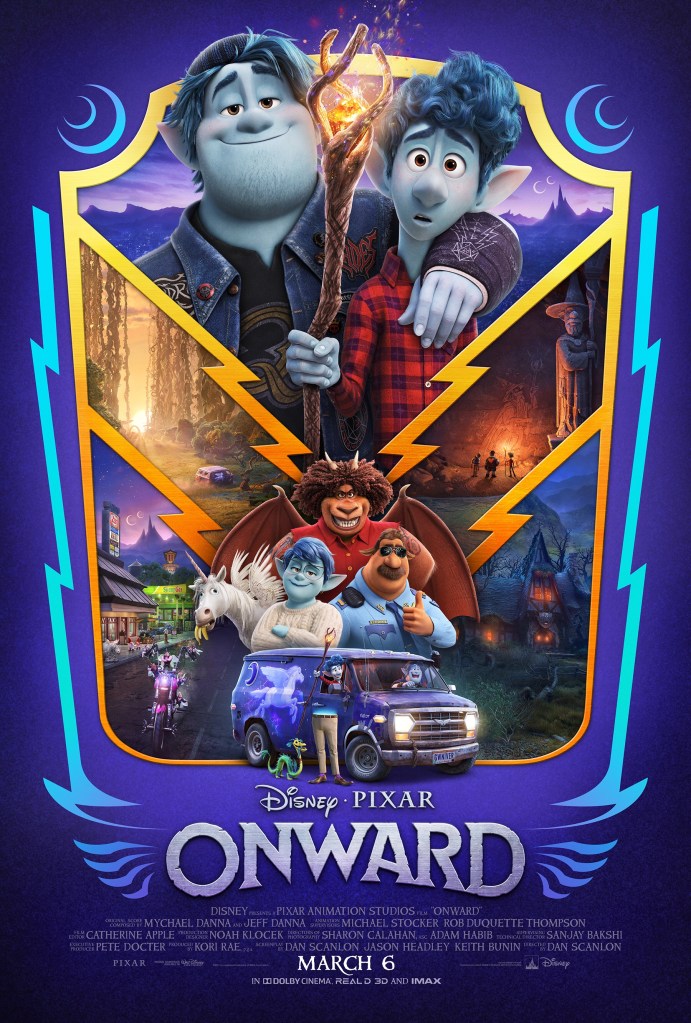
Despite myself, I decided to see Onward after being sucked in the trailer and the Twitter discourse surrounding its gay cop character. And, I found it absolutely delightful. I loved the character designs and found myself rooting for the two elf brothers on their road trip to see their father one last time (Barley is best boy). Of course the kids movie cop PR was there. The mother’s boyfriend is a centaur police officer (this is a joke about police horses? I think?), and there is of course the lesbian cop who references her girlfriend in one line (She’s also coded as black, which like… there’s layers here). This was discomforting in how openly strategic it was- putting non threatening police characters in proximity to rule breaking protagonists. But it faded into the background as I got sucked into the adventure and the world. I left the theatre feeling calmed and delighted- and weird about how much I bought into Disney’s latest film.

In his latest video, Kyle Kallgren makes the point that Disney films provide an escape from adult, capitalist reality rather than constructing an alternative mode of being. Where kids movies like Chicken Run, Over the Hedge, and Monsters, Inc pivot around rebellion and transgression (S/o to Jack Halberstam for the insight)- your average Disney fare provides a fantasy. You leave something like Onward feeling unchallenged and emotionally soothed. You want to believe that magic is real. You could live in a toadstool and have a loving family. You too could go on a road trip adventure with a DnD-obsessed brother and build your confidence.

Of course, lurking under the surface of our delight at elf siblings or Baby Yoda is the reality of Disney. A massive profit machine which famously pays its park employees starvation wages and has cornered a third of the market. Smaller animation studios like Laika cant compete with the giant- even though their movies are fun as fuck and visually interesting. Disney’s constant live-action or “photo-real” remakes of old properties cash in on nostalgia and promise celebrity appearances while turning out bland and soulless.

I wonder what the ethics are, of continuing to buy into the fantasy offered by a capitalist monolith in order to escape the stress and drudgery of capitalism. Is it ok to take refuge in childlike wonder at Walt’s hands? Or does that amount to complicity? Is this the sort of thing I can consume mindfully and critically? Or do we have to toss the whole thing out the window? Whatever. I’m tired and my brain is broken. Next week I’ll be back on track watching movies I hate and filling you in.

Jojo Rabbit and the Complications of Satirizing Fascism

I was going to write about Yun Kouga’s Loveless this week, on the basis that I hadn’t read it since I was a teenager, and even then felt that the age gap dynamic was uncomfortable and weird. However, This Friday I was discharged from eating disorder treatment after 3 months in what was ostensibly a day camp for sad people. The thought that now I have to actually get my life together and the loss of structure to my week has left me flopping around on the floor, being noncommittal. In lieu of a real article, have some cool and fun undeveloped thoughts on Jojo Rabbit.

I am not a real film critic I just have opinions

I love satire, especially political satire. I grew up on it; one of my favorite movies as a 10-year-old was Mel Brooks’ the Producers. In my early and mid teens I ate up South Park and the Colbert Report (pre-woke years, don’t @ me). I think when you’re growing up othered in some way, as I was as a developmentally disabled and queer kid, lampooning the status quo and those in power is an effective means of sanity. If you can look around you and say, “yeah my life sucks right now and I’m powerless to change it, but all of this is so hilariously absurd,” you can keep the weight of reality from crushing you. I feel like because I used this sort of comedy as a survival strategy, I get unduly defensive when I see criticisms of satire as a genre, which usually run along two lines:

  • There’s a danger in that some people might just not get it, and think that the satire is played straight. (The most commonly cited example of this is Fight Club, which like, yeah)
  • satire is a neoliberal fantasy that makes light of serious issues and does not promote radical social change. At it’s worst, it can make villains nonthreatening, and give further ammunition for ridiculing the other. I’ve seen a lot of criticism of Jon Stewart-era the Daily Show run along these lines.

Of course I initially ate up Taika Waititi’s Jojo Rabbit when I watched it last week, because, as stated above, I love that sort of shit. Then I read this takedown by Esther Rosenfield, and after the scheduled period of defensiveness, I began to digest it. And really thought about the way the film handled its subject matter. And the complications which arise when satirizing Nazis, per detraction #2 above.

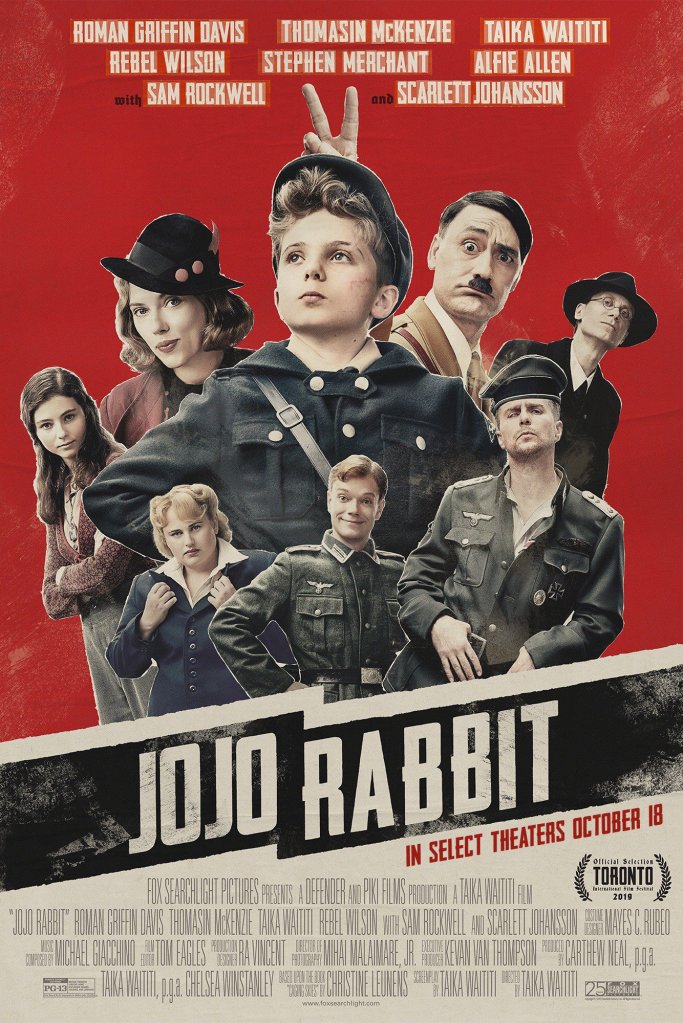
I do love Taika Waititi, I think he’s fantastic. I think Jojo Rabbit was very brave of him to make in a cultural moment that rejects nuance. I also just think the first half of the film is so, so funny. There’s a scene when Jojo is at Hitler Youth camp or whatever, where the counselor (I think Rebel Wilson?) shouts something akin to “Hey kids, ready to burn some books!?” and I just about lost my shit. Waititi as Imaginary Hitler is also the right amount of cartoonish and comical, and very believably the romanticized figment of a little boy’s imagination. In addition, I saw in an interview that Taika Waititi was interested in portraying how war was perceived through the eyes of children, which is really interesting and you can definitely do a lot with that! However, I think Jojo simultaneously went too far and not far enough.

The problem with satirizing something like Nazism is that you really have to stick the landing, or else wind up with something harmful. Something that, like detraction #2 against political satire says, “makes villains nonthreatening and gives further ammunition for ridiculing the other.” I feel like Jojo Rabbit does not stick the landing. The second half of the movie especially is tonally jumbled. It’s hard to take the serious things that happen seriously, or see the brutality of war and fascism as brutal, when people are still prancing around and silly things are happening. The climax of the film, when Berlin is taken, jumps in between harrowing scenes of explosions and offbeat comedy that echoed Waititi’s Hunt for the Wilderpeople. I think Waititi was trying to do the whole “through children’s eyes” thing here, but it still lessened the impact for me. Furthermore, the sympathetic portrayal of Sam Rockwell’s character, the Hitler youth counselor (?) left me feeling unsettled. It’s one thing to portray real-life historical villains as inept lunatics (I think Rebel Wilson’s performance did a good job at this), though once again you run the risk of defanging dangerous figures. It’s another to give them a mini character arc, show them ultimately sympathetic to the Jewish girl Jojo’s mother harbors, and have them save Jojo’s skin at the climax of the movie. He becomes sympathetic rather than an evil we’re mocking.

I commend Jojo for getting inside the head of an indoctrinated child while also clearly putting its foot down that the ideology in question is evil and bad. I also appreciated the exploration of his actively anti-Nazi mother and the sacrifices she makes to keep up a veil of normalcy and safety for her son (in no small part due to a fabulous performance by Scarlet Johansson- who is still cancelled). I do think it’s limited in scope by it’s own ambition (like, this movie is trying to do way too many things at once) and its focus on Jojo’s viewpoint. What about Elsa, the 17-year-old Jewish girl that Scarlet Johansson’s character is protecting? What about her viewpoint?

These are obviously fairly undeveloped thoughts, especially since I only saw the film once, and have only really been thinking about the problems with satire for a few days. Also, my working through this is starting to go beyond the scope of this short writeup. I’ll likely be returning to this topic as my thoughts and feelings about both the film and its genre continue to evolve. In the mean time, feel free to discuss this shit below. See you next week.

I Watched Caligula (Yes, All of it)

I’m going to start this off by admitting I consume a fair bit of fucked-up media. Not because I’m a disgusting monster (let’s hope), but because I’ll read about how harrowing something is to witness and my brain will go “it can’t be that bad, I bet I can handle it.” It’s like I’m trying to earn a Girl Scout badge for having sat through all of Salo or whatever. So when I went down a 2am wiki hole and read about Caligula’s bizarre and troubled production history- and how it was one of only two films Roger Ebert ever walked out of– I immediately went “this is something I absolutely must subject myself to.”

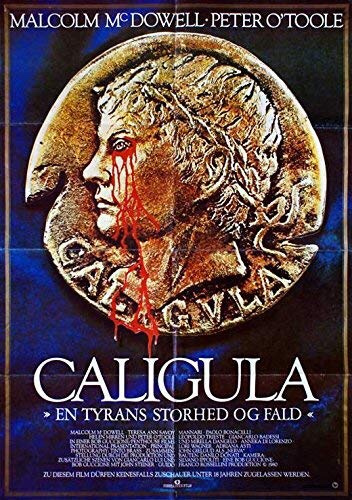
The fucking bleeding eye? On the coin? Do you see this shit?

Based on my (weak) research, Bob Guccione, founder of the soft-porn magazine Penthouse, went in with the intent of making a high-budget feature porn-with-plot movie. He hired Tinto Brass to direct. Then they gave Gore Vidal 20k to write the script, and when he finished they were like “this is too gay we have to redo it.” Then basically post-production Guccione filmed a bunch of hardcore porn scenes and spliced them throughout the film to spice things up, pissing off Tinto Brass in the process (you can very easily tell which these scenes are). Brass ended up disavowing the production. The thing is almost 3 hours long and there’s almost no plot. Just young Malcolm McDowell prancing around, being unhinged, framed by naked extras in almost every scene.

Caligula follows Caligula, obviously, from his ascent to Roman imperium to his assassination after just 4 years of rule. And going mad with power. And committing sex crimes. And killing everyone for treason. Also he has an incestuous relationship with his sister, Drusilla (played by Teresa Ann Savoy). The movie is disjointed as hell and fumbles any exploration of themes or character development- usually punctuating attempted plot points with weird, explicit sex or cartoonish shock-value violence (sometimes both! At the same time!). The story feels like it doesn’t matter and is replaced by a feverish procession of unsettling, and sometimes hilarious moments. Take a choice selection from my notes:

  • man w/a boner on stilts????
  • Men jacking off into a bowl????!
  • prolonged pussy-eating scene with ominous music
  • I’m like “this isn’t so bad” and then there’s a shot of a woman peeing
  • is that a map of modern Europe on the wall Holy Shit

Honestly, by the two hour mark I began to feel a sense of relief and serenity when there weren’t any genitals on screen. And when anything actually happened I could hardly contain myself.

I find myself wondering if they stuck to Vidal’s original script we would’ve gotten a coherent film. There’s bits and pieces here and there lifted directly from Roman historians. Tiberius being a lecherous creep and calling the boys in his pool his “little fishes” comes to mind. There’s also the quote “Let them hate me so long as they fear me,” which rung a bell in my Classics degree head, so I’m assuming its from Suetonius or something. Some thematic threads also underline the film, which, while handled poorly are most certainly interesting and there. A black bird flies into Caligula’s room several times, signalling a portent, though it’s never focused on or talked about by the characters. There’s also Caligula’s obsession with the cult of Isis and Egypt, which is never explored apart from his assertion that if he and Drusilla moved there they could marry each other. I imagine in Gore Vidal’s version all of these threads coalescing into a thematic, dramatic story about an unhinged man’s descent into further madness. I could be totally pulling some mental escapism though to excuse whatever the hell happened that let this damn movie see the light of day.

I have to reach for anything positive to say about Caligula, or the experience of sitting through 2 hours and 36 minutes of weird-porn hell. If anything, the sets and costumes are incredibly elaborate (if wildly historically inaccurate). All of the detail, color, and makeup was consistently giving me Fellini’s Satyricon vibes. But then I found myself wishing I could watch Satyricon instead and that made me depressed. When in prison Caligula makes friends with a barbarian dude, who rules. You never have to see his dick and he never says anything, which is a win as far as this movie goes.

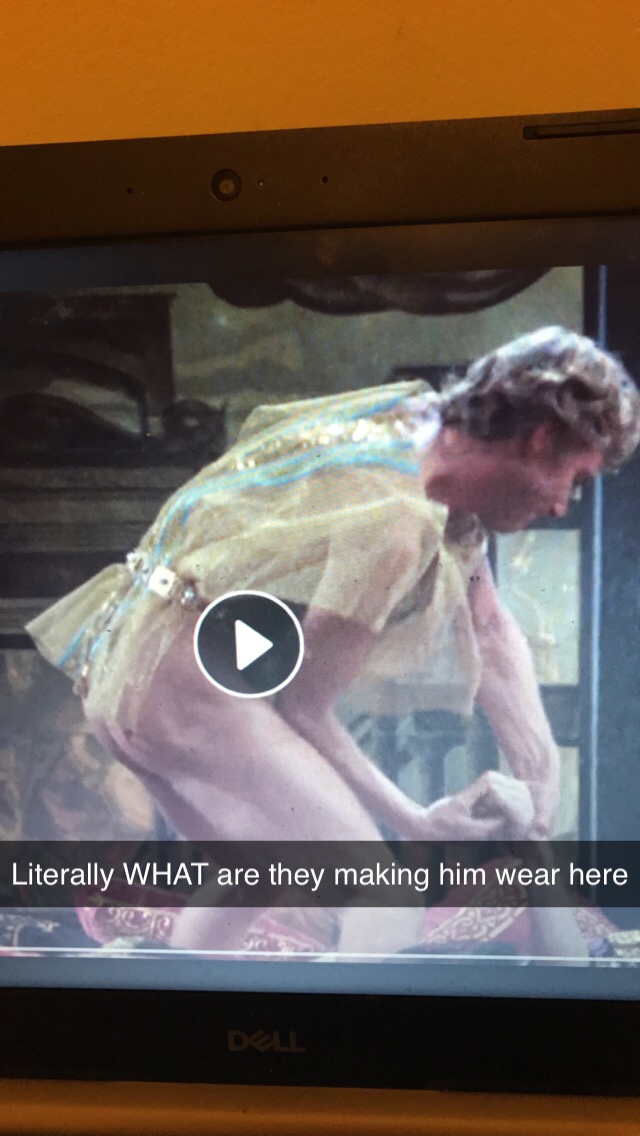
Again, truly incredible costume choices

Anyway, I never want to see this film again. The morning after finishing it I was feeling unsettled like I had just watched a Kubrick movie- but no, I was just shell-shocked from how bad Bob Guccione’s attempt at an erotic historical drama was. I had to watch a Taika Waititi movie to cleanse my palate and return me to a stable mental state. Tune in next week when I’m fully recovered and (probably) reviewing a favorite manga of the late 2000’s.

Conflict is Not Abuse: Preliminary Thoughts

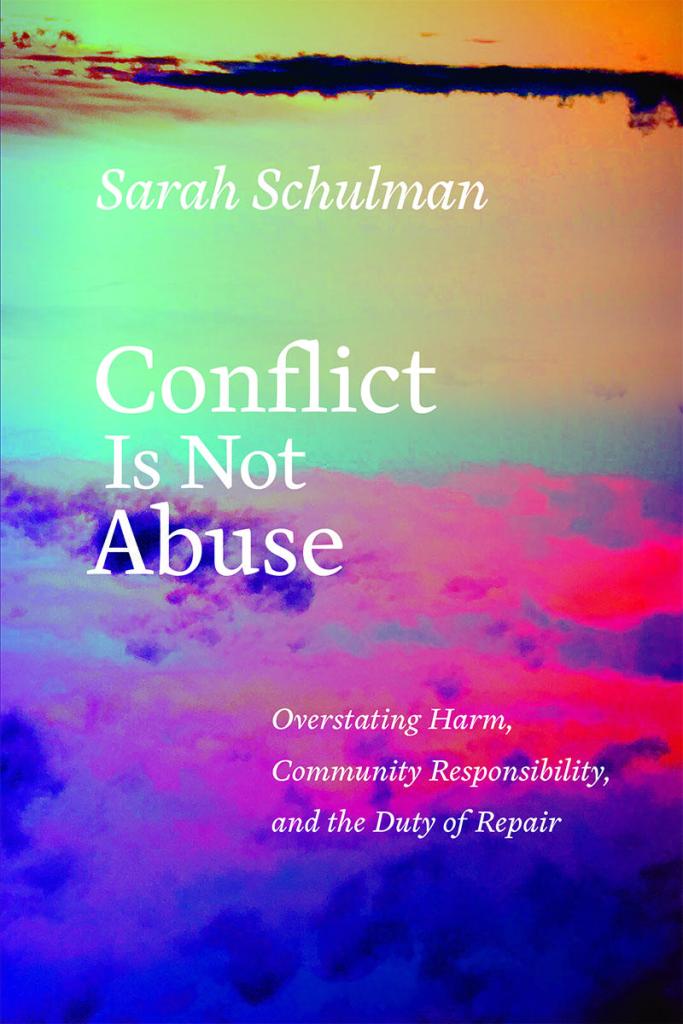
I first encountered Sarah Schulman’s Conflict is not Abuse: Overstating Harm, Community Responsibility, and the Duty of Repair in the theory section of Giovanni’s Room in Philadelphia. I was working through accepting my own trauma at the time, and the idea that the toxic interpersonal relationships I had been in could be labeled simply “conflict” felt, uh, threatening. I ended up shoving the book back on the shelf, buying a cute little anthology instead, and spent the next month or two sending the cover of Schulman’s book to friends with the caption “ever felt gaslit by a book title before?” (I know)

Cue stress response lmao

After having actually read the book though, I think my reaction is overwhelmingly positive. My initial thoughts in the bookstore were that this was going to be a minimizing, victim-blaming mess, a knee-jerk reaction to the current queer and left-wing social culture that seems dominated by allegations of abuse and the claiming of personal trauma. However, I found the thread underlying the book as a whole to be fairly grounded and uncontroversial. I think Schulman’s central thesis can be summarized as follows:

  • Conflict and abuse are not the same thing
  • Abuse is defined as “power over ” the victim, whether physically, emotionally, etc. And therefore there can be no such thing as “mutually abusive relationships.” She underlines this by engaging with the work of social worker Catherine Hodes.
  • Traumatized individuals, by projecting their own past abuse onto present conflicts, have a tendency to overreact to “normative conflict” and escalate the situation or press accusations of abuse when they feel their sense of self or worldview threatened. Retreating into victim status ensures a sense of safety and an absolution of culpability.
  • Individuals coming from a supremacist position tend to react to normative conflict in much the same way, when they feel their sense of truth threatened by difference.
  • People can come from traumatized and supremacist positions at the same time! fun!
  • Conflict resolution, atonement, and repair to relationships can only really happen through real conversation- shunning someone or cutting someone off is not restorative (and, she claims, largely a response of people’s contemporary ability to hide behind text and email, block people, etc.)

There’s also a bunch of stuff in here about how this plays out at a family and state level but I’m less interested in that than how this kind of escalation plays out in peer groups and intimate relationships (I also think Schulman’s chapters on the Queer family and the Israel/Palestine conflict are the weakest and weirdest parts of the book, and could’ve been expanded on but w/e)

I’ll definitely be rereading this book so I can better expand on my thoughts here- especially surrounding it’s prescience in the current social climate, why Sarah Schulman is so goddamn unpopular, and all of the glaring issues I had with the book.I will say that the first ~130 pages are required reading for those operating in queer and left circles, if you have the emotional wherewithal and stability to handle them. Ultimately, though, this discussion takes a lot of nuance and I’m tired. Tune in Friday I guess.

Mission statement?? I guess??

Helloooo friends and visitors, and welcome to my blogge. I decided recently that, as I transition out of intensive treatment for my fun and cool array of maladaptive behaviors, I need some sort of creative project to help me rediscover myself. An outlet that screams “look at me! I exist! I’m smart and have opinions on things! My thoughts are dignified and worth existing in a place where people can see them! This is how I feel about Scott Pruitt, Sarah Schulman, and Fruits Basket!”

With that in mind, I decided that this would be a good way to start. I could work on my writing and give myself a small string of accomplishments to boost my morale. Blogs are still a thing that people do, right? Anyway, you can look forward to the following:

  • Book reviews anytime I read something that either “changes my life” or just really pisses me off
  • Short researched essays on things that, again, piss me off or are otherwise interesting.
  • Art? Maybe? Once I’m comfortable and inspired in doing that again?
  • Maybe journal entries on cool things I do (we’ll see!)

I’m going to make an attempt to update on Wednesdays, and hopefully on Saturdays also once I get on a roll. Anyway, I look forward to your readership!

Design a site like this with WordPress.com
Get started